
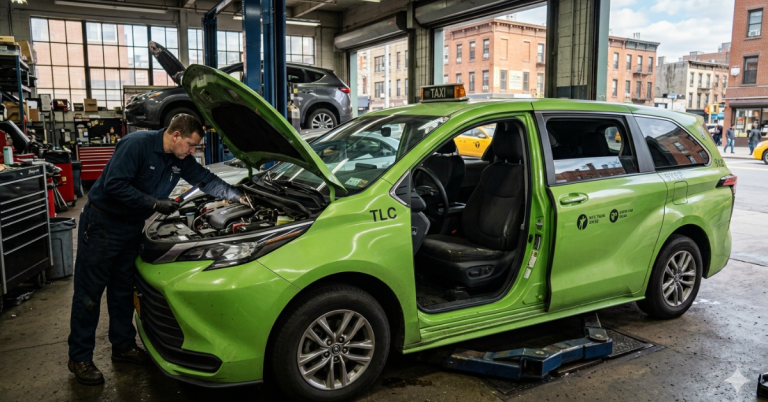
Driving for the TLC means your vehicle is your livelihood. Navigating city streets, enduring endless stop-and-go traffic, and hitting inevitable potholes put a tremendous amount of stress on a car. While regular maintenance is a given, many drivers inadvertently make mistakes that lead to costly repairs, unexpected breakdowns, and lost shifts.
Here are the most common car maintenance mistakes TLC drivers need to avoid to keep their vehicles running smoothly and profitably.
1. Pushing Brake Pads to the Absolute Limit
City driving requires constant braking, which wears down pads significantly faster than highway driving. A common mistake is waiting until you hear a loud grinding noise before getting the brakes checked.
-
The Consequence: Once the brake pad material is completely gone, the metal backing grinds directly against the rotor. What could have been a simple brake pad replacement now requires replacing the expensive rotors as well.
-
The Fix: Have your brake pads and brake fluid visually inspected during every oil change or tire rotation.
2. Ignoring Tire Pressure and Alignment
Tires take the brunt of rough city streets. Failing to check tire pressure regularly or ignoring a slight pull in the steering wheel are frequent oversights.
-
The Consequence: Underinflated tires reduce fuel efficiency and cause premature tread wear. Driving with bad alignment—often caused by hitting a pothole—will destroy a brand-new set of tires in just a few weeks and put extra strain on the suspension.
-
The Fix: Check tire pressure weekly using a manual gauge. If you hit a severe pothole or notice uneven wear on the tread, get an alignment check immediately.
3. Stretching Out Fluid Change Intervals
Stop-and-go traffic is considered “severe driving conditions” by every vehicle manufacturer. Following the standard “normal” highway mileage intervals for fluid changes is a major mistake.
-
The Consequence: Degraded engine oil loses its lubricating properties, leading to engine sludge and overheating. Neglecting transmission fluid under heavy city driving conditions is a leading cause of premature transmission failure in minivans and SUVs.
-
The Fix: Follow the “severe duty” maintenance schedule in your owner’s manual. Regularly check and replace engine oil, transmission fluid, and engine coolant.
4. Using Substandard Aftermarket Parts
When a part breaks, it is tempting to go with the absolute cheapest replacement available to get back on the road quickly.
-
The Consequence: Cheap, unbranded brake pads, belts, or filters wear out much faster than original equipment manufacturer (OEM) or high-quality aftermarket parts. A cheap serpentine belt might snap mid-shift, leaving you stranded with a passenger in the back seat.
-
The Fix: Invest in high-quality, reputable parts. The slight increase in upfront cost pays off by keeping the vehicle out of the shop and on the road.
5. Overlooking the Cabin and Engine Air Filters
Filters are easy to forget because they are out of sight, but they are critical for both vehicle health and passenger comfort.
-
The Consequence: A clogged engine air filter chokes the engine, reducing fuel efficiency and acceleration. A dirty cabin air filter forces the AC system to work harder, blowing stale, dusty air into the cabin—which can quickly lead to poor passenger ratings.
-
The Fix: Inspect the engine air filter every 15,000 miles. Replace the cabin air filter at least twice a year, especially after the heavy pollen season of spring and before the winter heater season.
6. Treating Dashboard Warning Lights as “Suggestions”
It is common for drivers to ignore a Check Engine or TPMS (Tire Pressure Monitoring System) light if the car “feels like it’s driving fine.”
-
The Consequence: Modern vehicles rely on a complex network of sensors. Ignoring a minor emissions sensor issue can quickly cascade into a blown catalytic converter, which is an incredibly expensive repair.
-
The Fix: Never ignore a dashboard light. Keep an OBD-II scanner in your glovebox to read the codes yourself, or take the car to a mechanic immediately to diagnose the issue before it turns into a massive repair bill.